x
Finance Free Apps
AU-EN

Editions and Languages

  • Australia
  • Bahrain
  • Canada
  • France
  • Germany
  • India
  • Kenya
  • Kuwait
  • Mexico
  • Nigeria
  • Oman
  • Qatar
  • Saudi Arabia
  • Singapore
  • South Africa
  • United Arab Emirates
  • United Kingdom
  • United States
Global
  • Inventory
    • SKU Generator
    • Purchase Order Generator
    • Calculate Reorder Point
    • Economic Order Quantity
    • Break-even Point Calculator
    • Inventory Turnover Ratio
    • Packing Slip Generator
    • Barcode Generator
    • Shipping Label Generator
    • Wholesale price calculator
    • Lead Time Calculator
    • Average Inventory Calculator
    • Inventory Cost Calculator
    • Finished Goods Inventory Calculator
    • Beginning Inventory Calculator
    • Handling Fee Calculator
    • Retail Price Calculator
    • Sales Forecast Calculator
    • Work in Progress Calculator
    • Wholesale margin calculator
    • GMROI Calculator
    • Weeks on hand Calculator
    • Raw materials inventory calculator
    • Moving Average Cost Calculator
    • Cost of goods sold calculator
    • Sell through rate calculator
    • Fill rate calculator
    • Cost price calculator
    • Carrying cost calculator
    • Days inventory outstanding calculator
  • Billing
    • Create Invoices
    • Generate Estimates
    • Create Receipts
    • Discount Calculator
    • Revenue Forecast
    • Markup Calculator
  • Accounting
    • Project Cost Quote Calculator
    • Financial Report Templates
  • Expense
    • Expense Report Generator
    • Expense Report Template

Sell through rate calculator

by Zoho Inventory
Check out Zoho Inventory
Sign up. It's Free!

Sell through rate calculator

Find out what percentage of your received inventory actually sold in any given period.

Sell through rate

0.00%

What is sell through rate?

Sell through rate (STR) is a retail metric that measures what proportion of received inventory was sold during a specific time period, expressed as a percentage. It compares units sold against units received and is used to gauge how effectively a business is moving stock.

What you need to know about sell through rate:

  • Sell through rate is expressed as a percentage, where 100% means every unit received was sold during the measurement period.

  • A sell through rate between 80% and 100% is generally considered strong across most retail product categories.

  • Tracking sell through rate per SKU helps identify slow-moving products before they accumulate as dead stock.

How to calculate sell through rate

Sell-through rate (%) is calculated by dividing the number of units sold by the number of units received, then multiplying the result by 100.

Sell through rate (%) =
{
Units sold
Units received
}
* 100

Why is calculating sell through rate important?

Prevent overstock

Prevent overstock

When you track sell through rate regularly, you catch slow-moving inventory before carrying costs compound. This helps you order more precisely and avoid tying up capital in stock that isn't selling.
Improve purchasing decisions

Improve purchasing decisions

A consistent record of sell through rates across SKUs gives buyers clear data on which products deserve larger orders and which should be scaled back or discontinued before the next buying cycle.

Spot demand shifts early

Spot demand shifts early

Sell through rate changes are often the first signal of a shift in customer demand. Monitoring the metric week over week or month over month lets you respond while there is still time to adjust inventory levels, run targeted promotions, or revise pricing.

Frequently asked questions

  • A sell through rate of 80% or higher is considered good for most product categories. Rates in this range indicate that the majority of received stock sold within the period, reflecting strong demand alignment and healthy inventory management. The right benchmark varies by industry—fashion and seasonal goods often target rates above 80%—while categories with longer shelf lives may operate comfortably at lower rates.
  • Sell through rate measures the percentage of received inventory that sold in a given period. Inventory turnover measures how many times total inventory was sold and replaced over a set timeframe. Both track inventory efficiency, but sell through rate is more useful at the individual SKU level, while turnover is typically used for broader inventory health assessments.
  • A low sell through rate usually means you are receiving more inventory than demand can absorb. To improve it, review reorder quantities, run promotions on slow-moving SKUs, and use historical sell through data to guide future buying. Bundling slow sellers with popular products or adjusting pricing can also accelerate clearance of excess stock.
  • Use unit counts, not currency values. Enter the number of individual units sold and the number of units received. The resulting percentage is currency-agnostic and applies uniformly regardless of the product’s price point.
Zoho Inventory logo

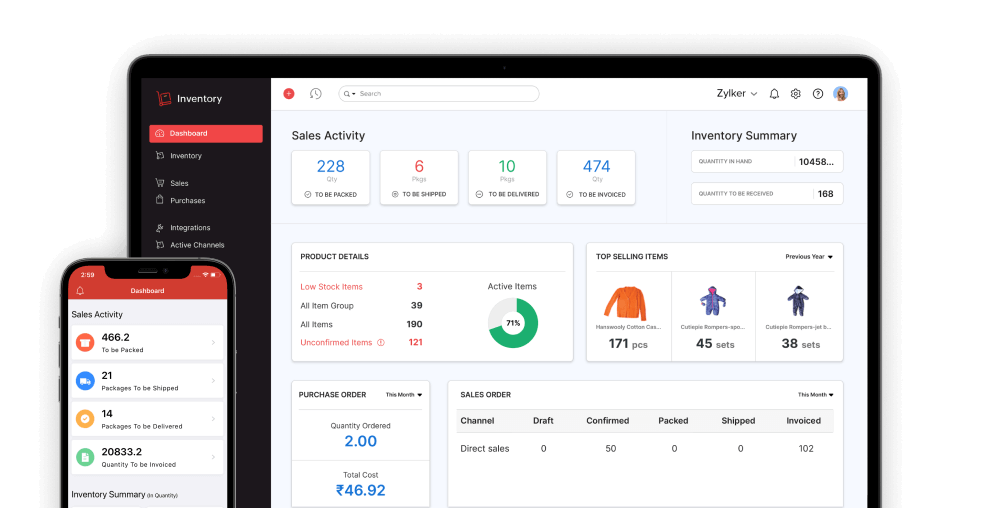
Simplify inventory and order management for your business

  • Inventory Control
  • Warehouse Management
  • Multichannel Selling
  • Order Management
  • End-to-end tracking
  • Mobile app
SIGN UP - IT'S FREE Zoho Inventory Dashboard