x
Finance Free Apps
FR-EN

Editions and Languages

  • Australia
  • Bahrain
  • Canada
  • France
  • Germany
  • India
  • Kenya
  • Kuwait
  • Mexico
  • Nigeria
  • Oman
  • Qatar
  • Saudi Arabia
  • Singapore
  • South Africa
  • United Arab Emirates
  • United Kingdom
  • United States
Global
  • Inventory
    • SKU Generator
    • Purchase Order Generator
    • Calculate Reorder Point
    • Economic Order Quantity
    • Break-even Point Calculator
    • Inventory Turnover Ratio
    • Packing Slip Generator
    • Barcode Generator
    • Shipping Label Generator
    • Wholesale price calculator
    • Lead Time Calculator
    • Average Inventory Calculator
    • Inventory Cost Calculator
    • Finished Goods Inventory Calculator
    • Beginning Inventory Calculator
    • Handling Fee Calculator
    • Retail Price Calculator
    • Sales Forecast Calculator
    • Work in Progress Calculator
    • Wholesale margin calculator
    • GMROI Calculator
    • Weeks on hand Calculator
    • Raw materials inventory calculator
    • Moving Average Cost Calculator
    • Cost of goods sold calculator
    • Sell through rate calculator
    • Fill rate calculator
    • Cost price calculator
    • Carrying cost calculator
    • Days inventory outstanding calculator
  • Billing
    • Create Invoices
    • Generate Estimates
    • Create Receipts
    • Discount Calculator
    • Revenue Forecast
    • Markup Calculator
  • Expense
    • Expense Report Generator
    • Expense Report Template

Cost price calculator

by Zoho Inventory
Check out Zoho Inventory
Sign up. It's Free!

Free Cost price calculator

Enter your selling price and profit margin to find the cost price behind any product.

€
%

Cost price

€ 0.00

What is cost price?

Cost price—also called the purchase price or buying price—is the amount a business spends to acquire or produce a single unit before applying any markup. It is the foundation of every pricing decision.

What you need to know about cost price:

  • Cost price covers what you pay to acquire or produce a unit—not commissions, outbound shipping, or other selling expenses.

  • Apply a profit margin to your cost price and you arrive at your selling price—the two figures are permanently linked.

  • Any change in supplier terms, exchange rates, or order quantities will shift your cost price and may require a price review.

How to calculate cost price

Cost price is calculated by taking the selling price and multiplying it by the result of 1 minus the profit margin (expressed as a percentage) divided by 100.

Cost price = Selling price * (1 − Profit margin ÷ 100)

Why is calculating cost price important?

Set prices you can defend

Set prices you can defend

Knowing your cost price prevents accidental underpricing that quietly erodes profit. It also gives you hard numbers to justify price decisions to buyers, investors, or your own finance team when margins come under scrutiny.

Protect margins when costs rise

Protect margins when costs rise

When a supplier quote changes, recalculating cost price immediately shows whether your current selling price still holds or needs to be revised so you catch margin compression before it shows up in your accounts.
Make smarter purchasing decisions

Make smarter purchasing decisions

Cost price is the lens through which you evaluate supplier quotes, negotiate volume discounts, and decide which products are worth stocking. When you track it consistently inside an inventory system, every purchase order becomes a data point that sharpens your overall pricing strategy and reveals which SKUs are genuinely profitable.

Frequently asked questions

  • Cost price is calculated by multiplying your selling price by 1, minus your profit margin expressed as a decimal: Cost price = Selling price × (1 − Profit margin ÷ 100). For instance, if you sell a product for 200 and your profit margin is 30%, the cost price is 200 × 0.70 = 140.
  • Cost price is what you pay to acquire or produce a product. Selling price is what your customer pays for it. The gap between the two—expressed as a percentage of the selling price—is your profit margin. Understanding both is essential before setting any price list.
  • Not exactly. Cost of goods sold (COGS) is the total cost of all units sold during a period, while cost price is the per-unit acquisition or production cost. COGS equals cost price multiplied by the number of units sold, so getting the per-unit cost right is the starting point for accurate COGS reporting.
  • If you know your markup percentage—which is calculated on cost, not on selling price—use: Cost price = Selling price ÷ (1 + Markup ÷ 100). The calculator above uses the gross profit margin formula (margin calculated on selling price). If you’re unsure which you have, check whether the percentage was applied to the cost or to the selling price.
Zoho Inventory logo

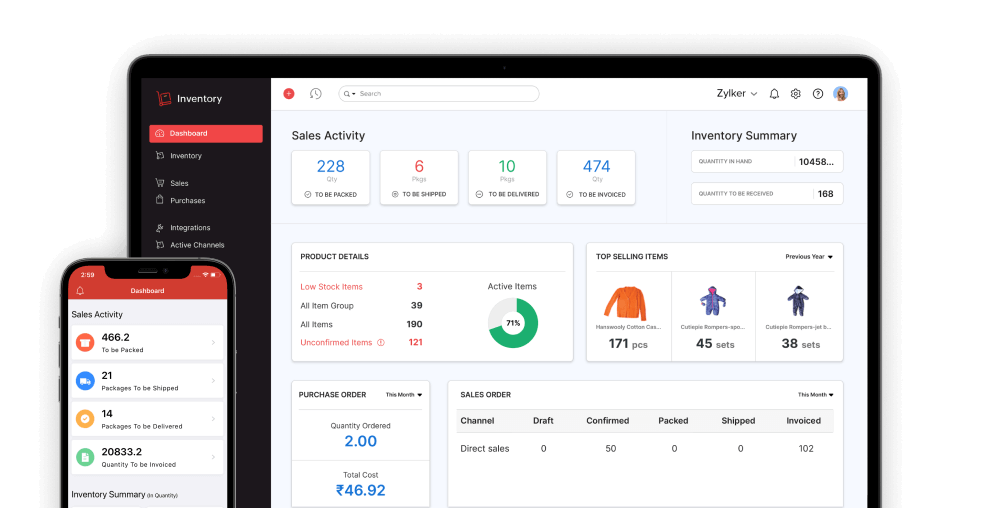
Simplify inventory and order management for your business

  • Inventory Control
  • Warehouse Management
  • Multichannel Selling
  • Order Management
  • End-to-end tracking
  • Mobile app
SIGN UP - IT'S FREE Zoho Inventory Dashboard