x
Finance Free Apps
MX-EN

Editions and Languages

  • Australia
  • Bahrain
  • Canada
  • France
  • Germany
  • India
  • Kenya
  • Kuwait
  • Mexico
  • Nigeria
  • Oman
  • Qatar
  • Saudi Arabia
  • Singapore
  • South Africa
  • United Arab Emirates
  • United Kingdom
  • United States
Global
  • Inventory
    • SKU Generator
    • Purchase Order Generator
    • Calculate Reorder Point
    • Economic Order Quantity
    • Break-even Point Calculator
    • Inventory Turnover Ratio
    • Packing Slip Generator
    • Barcode Generator
    • Shipping Label Generator
    • Wholesale price calculator
    • Lead Time Calculator
    • Average Inventory Calculator
    • Inventory Cost Calculator
    • Finished Goods Inventory Calculator
    • Beginning Inventory Calculator
    • Handling Fee Calculator
    • Retail Price Calculator
    • Sales Forecast Calculator
    • Work in Progress Calculator
    • Wholesale margin calculator
    • GMROI Calculator
    • Weeks on hand Calculator
    • Raw materials inventory calculator
    • Moving Average Cost Calculator
    • Cost of goods sold calculator
    • Sell through rate calculator
    • Fill rate calculator
    • Cost price calculator
    • Carrying cost calculator
    • Days inventory outstanding calculator
  • Billing
    • Create Invoices
    • Generate Estimates
    • Create Receipts
    • Discount Calculator
    • Revenue Forecast
    • Markup Calculator
  • Expense
    • Expense Report Generator
    • Expense Report Template

Days inventory outstanding calculator

by Zoho Inventory
Check out Zoho Inventory
Sign up. It's Free!

Days inventory outstanding calculator

Find out how many days it takes, on average, to sell through your inventory.

MXN
MXN

Days inventory outstanding (in days)

0.00

What is days inventory outstanding?

Days inventory outstanding (DIO) measures the average number of days a business holds inventory before selling it. The formula uses average inventory, cost of goods sold, and the length of the period being measured to show how quickly stock moves. A lower DIO means inventory turns into sales faster, while a higher DIO means stock sits longer before it sells.

What you need to know about DIO:

  • DIO uses average inventory, cost of goods sold, and the number of days in a period to calculate turnover speed.

  • A falling DIO across several periods often signals stronger demand or a tighter inventory management process.

  • Retailers and manufacturers compare DIO against industry benchmarks to judge how efficiently stock is managed.

How to calculate days inventory outstanding

If you have not already worked out your average inventory, use the average inventory calculator first, then multiply the result by the number of days in the period you are measuring.

DIO =
{
Average inventory
Cost of goods sold
}
* Number of days in given period

Why is calculating days inventory outstanding important?

Spot slow-moving stock early

Spot slow-moving stock early

A rising DIO flags inventory that is sitting too long, so you can adjust purchasing or run a promotion before it ties up more cash.

Plan cash flow with more accuracy

Plan cash flow with more accuracy

Knowing how long stock takes to sell helps you forecast when cash tied up in inventory will convert back into revenue.

Benchmark performance against your industry

Benchmark performance against your industry

Comparing your DIO to industry averages shows whether your inventory turns over faster or slower than competitors, which is a signal of operational efficiency and demand alignment.

Frequently asked questions

  • A good DIO depends on the industry. Retailers with perishable goods often aim for a DIO under 30, while manufacturers with longer production cycles may see a DIO of 60 or more. Compare your DIO against industry peers rather than a fixed target.
  • Inventory turnover shows how many times inventory is sold and replaced within a period, while DIO shows the average number of days that turnover takes. The two metrics are inversely related: As turnover rises, DIO falls.
  • No. DIO cannot be negative because it is based on average inventory and cost of goods sold, both of which are zero or positive values. A DIO of zero would mean inventory sells the same day it is received.
  • Most businesses calculate DIO monthly or quarterly to track trends over time. Seasonal businesses may also calculate it around peak periods to catch changes in stock movement early.
Zoho Inventory logo

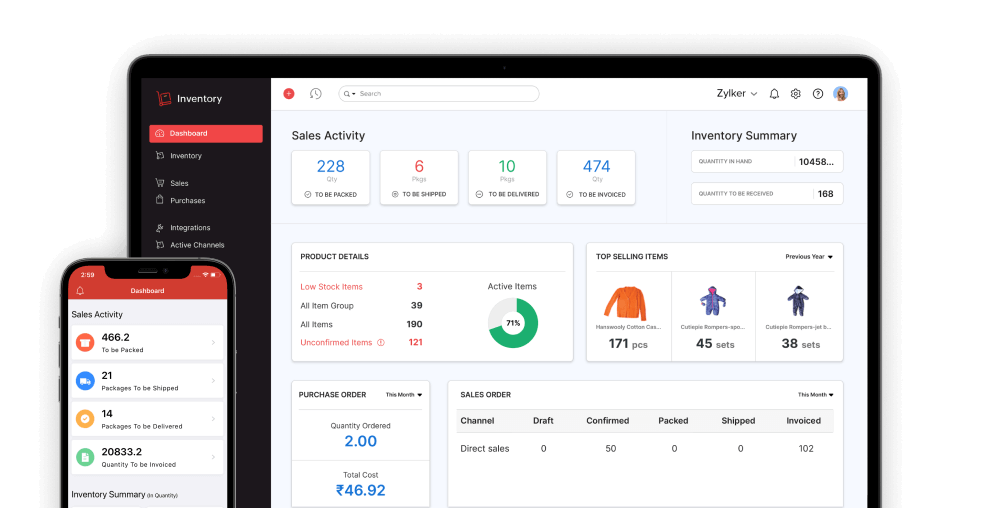
Simplify inventory and order management for your business

  • Inventory Control
  • Warehouse Management
  • Multichannel Selling
  • Order Management
  • End-to-end tracking
  • Mobile app
SIGN UP - IT'S FREE Zoho Inventory Dashboard