EssilorLuxottica's 2.5 NVG achieved near-perfect fulfillment rate using Zoho Inventory
With Zoho Inventory, 2.5 New Vision Generation China has achieved:
- An almost 100% fulfillment rate, supported by better stock visibility and inventory planning
- <0.01% stock variance during warehouse tallies, with zero write-offs at physical stock counts
- Monthly reporting reduced from half a day to around one hour, an estimated 75% faster turnaround
- 1,000+ frame SKUs organized into ~300 SPUs, improving catalog structure and product management
- A single reporting source replacing a patchwork system of spreadsheets and disconnected files across inventory, invoicing, and stock
- A 90% drop in order form requests after connecting Zoho Inventory with Zoho Commerce
The company
2.5 New Vision Generation, or 2.5 NVG, is an initiative by EssilorLuxottica, the global eyewear group best known for brands like Ray-Ban, Vogue Eyewear, and Oakley.
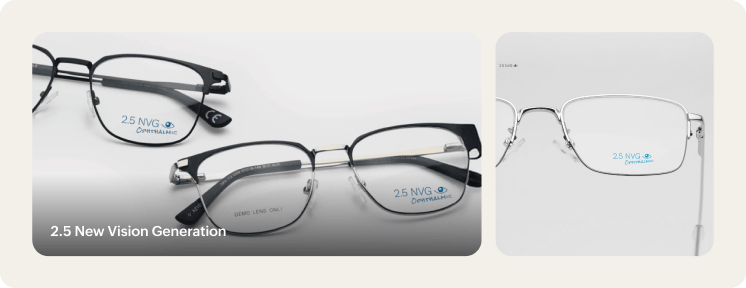
In their branch in Shanghai, China, the business is predominantly distribution-focused. They supply a diverse B2B customer base, including opticians, retailers, distributors, NGOs, government agencies, and internal EssilorLuxottica customers across global markets. The team manages a catalog that goes far beyond lenses, including frames, readers, sunglasses, ready-2-clip sets, cases, cloth, and chains.
While EssilorLuxottica operates at global scale, the 2.5 NVG China distribution hub runs as a seven-member team, carrying the standards of a large enterprise, and moving with the pace and resourcefulness of a growing business unit.
The challenge
2.5 NVG China first managed inventory using a legacy system inherited from EssilorLuxottica’s core lens business. It did one thing well: lenses. But, it could not keep pace with a distributor selling a much broader consumer catalog, and it offered no meaningful reporting, forcing the team to reconcile data by hand in spreadsheets.
The team then moved to a dedicated inventory platform, TradeGecko (which was later rebranded as QuickBooks Commerce). It was a step forward, but the team still ran into limits around how much product information they could maintain and in the way they needed. Reporting also remained manual, with fewer report options and more spreadsheet work than the team wanted.
The acquisition of TradeGecko by QuickBooks added another layer of concern. Local and regional support became limited. Certain functions, including local language and currency support, were removed. The platform also became more closely tied to the QuickBooks suite, which meant the team would have needed additional subscriptions to continue parts of their existing operations.
As a growing distribution unit inside a global organization, the team needed something more flexible, more cost-effective, and easier to shape around their operations.
The solution
2.5 NVG China migrated its catalog into Zoho Inventory in 2021, and used the transition to build a cleaner operational foundation.
Flexible catalog structure
The team moved away from creating SKUs in isolation and started linking them to shared attributes like shape and color, cutting down on redundant listings and making product management simpler.
The most complex part of their catalog was managing ready-made reading glasses and lenses, where a single product could have dozens of power variants. Zoho Inventory helped the team structure these products using custom fields and item variants. That structure now carries a catalog spanning well over a hundred SKUs, each filterable by material, color, gender, and frame shape.
In frames alone, they grouped over 1,000 SKUs into around 300 SPUs, making the catalog easier to manage and scale.
Cleaner stock tracking across locations
2.5 NVG China also used Zoho Inventory’s multi-location capability to simplify stock tracking across the locations that carry sellable inventory.
By tagging transactions to the right warehouse location, the team could maintain clearer visibility into stock movement without overcomplicating the system. This gave them a more practical way to manage inventory across a distribution network with multiple stock points.
Reporting without the manual chase
Reporting used to be one of the biggest pain points for the team in Shanghai. In TradeGecko, every report had to be pieced together from multiple files. A sales report, for example, would not carry a customer’s shipping address, so the team had to cross-reference a separate file to complete basic order documentation.
With Zoho Inventory, the team can now pull the data they need more directly.
A robust online storefront integration
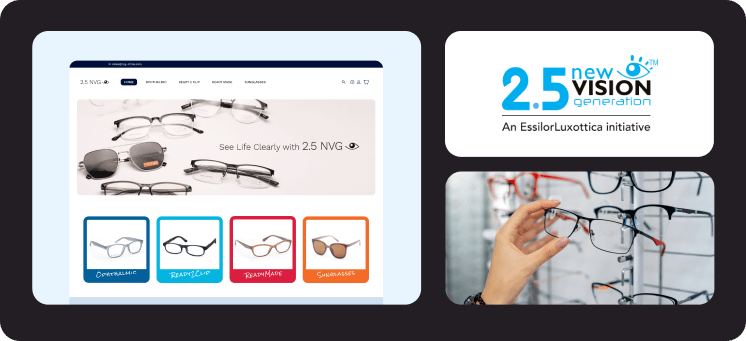
2.5 NVG China connected Zoho Commerce to Zoho Inventory a couple of years later, and gave their B2B customers a better way to place bulk orders. This worked far better than their previous Shopify store; the orders placed through their B2B Zoho Commerce store updated the item stock details in Zoho Inventory in real time. The two-way instant data updation in both the applications worked like a charm for their operations.
Benefits and ROI
Fulfillment rate is close to 100%
With better stock visibility through Zoho Inventory, the team is able to prevent stockouts and overstocking, and fulfill orders more reliably, achieving a near-perfect fulfillment rate.
The team also uses historical data from Zoho Inventory to support replenishment planning. Since demand can be seasonal and customer buying patterns are not always consistent, replenishment still requires business judgment. But Zoho Inventory gives them the data foundation to make those calls.
“Every ingredient we need to come up with a more accurate replenishment plan is inside Zoho,” Chen noted.
Stock variance stays below 0.01%
In the stock tally processes done periodically in their warehouses, the variance is less than 0.01%. The team reports no meaningful shortage and no practical stock write-off during stock counts.
For a distribution business managing multiple product categories and order types, this level of accuracy gives the team more confidence in stock control, fulfillment, and replenishment planning.
Reporting is now 75% faster than before
With TradeGecko, monthly reporting took around half a day. In Zoho Inventory, the same work now takes roughly one hour, giving the team a 75% faster turnaround.
The 2.5 NVG team in Shanghai now has a single, clean source of data to hand off to accounting and to EssilorLuxottica’s broader reporting needs.
Order workflows became less manual
Connecting Zoho Inventory to Zoho Commerce helped streamline customer-side order placement and also keep the item stock updated in real time in both applications. As a result, catalog requests have dropped to almost zero, and the team in Shanghai now spends almost no time updating the order details into Zoho Inventory for accurate inventory tracking.
Looking ahead
2.5 NVG China sees its current setup as a foundation, not a finish line.
As the business matures, the team plans to continue improving catalog management, large-order workflows, physical stock automation in warehouses, and replenishment planning through Zoho Inventory.